
Gerry Miller and the uneasy spirit of the early 1960s
The early 1960s were a time of profound change in American life. The civil rights movement was challenging deeply entrenched systems of segregation, Cold War anxieties permeated everyday life, and established ideas about society and individual identity were being questioned.
Against this backdrop, Gerry Miller created a compelling group of prints exploring both the public tensions and private experiences of the period.
Some confront social injustice directly. Others turn inward, depicting isolated figures, troubled expressions, and moments of quiet introspection. Together, they suggest an artist attentive to the complexities of the human experience.
What makes these works particularly interesting is the conversation that emerges when they are viewed together.
Public Protest
In Americans Can't Eat Here, Miller confronts the subject of exclusion with a directness that resonates with the civil rights struggles of the period. The title itself evokes the segregation of public accommodations, one of the defining battlegrounds of the movement.
During the early 1960s, sit-ins, demonstrations, and other acts of civil disobedience challenged the denial of basic rights to Black Americans. Restaurants and lunch counters became powerful symbols of a larger struggle over equality and belonging.
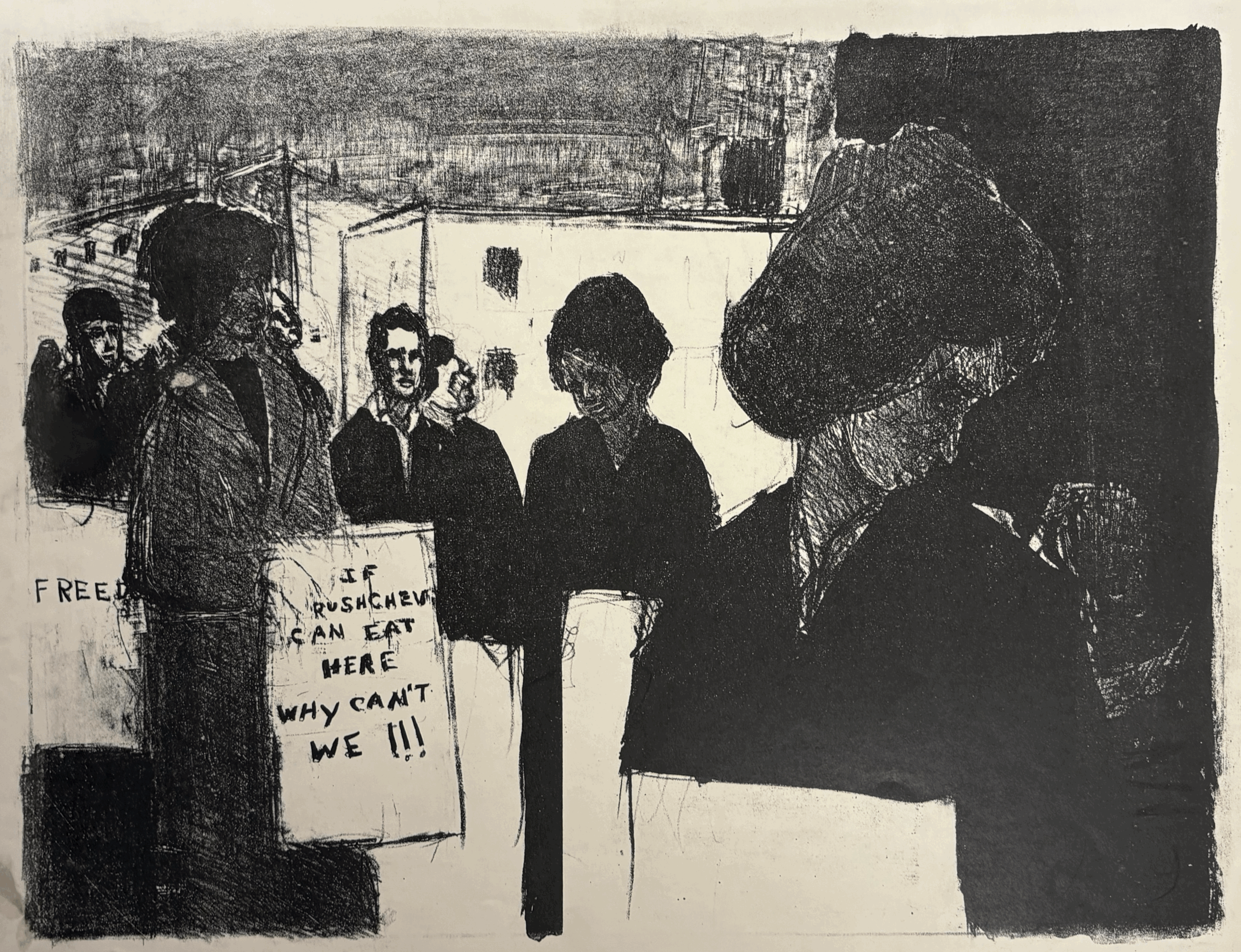
Gerry Miller, “If Krushchev Can Eat Here”, lithograph
Miller's work belongs in conversation with that history. Whether conceived as a response to a particular event or as a broader statement about injustice, it demonstrates an engagement with the social questions of his time.
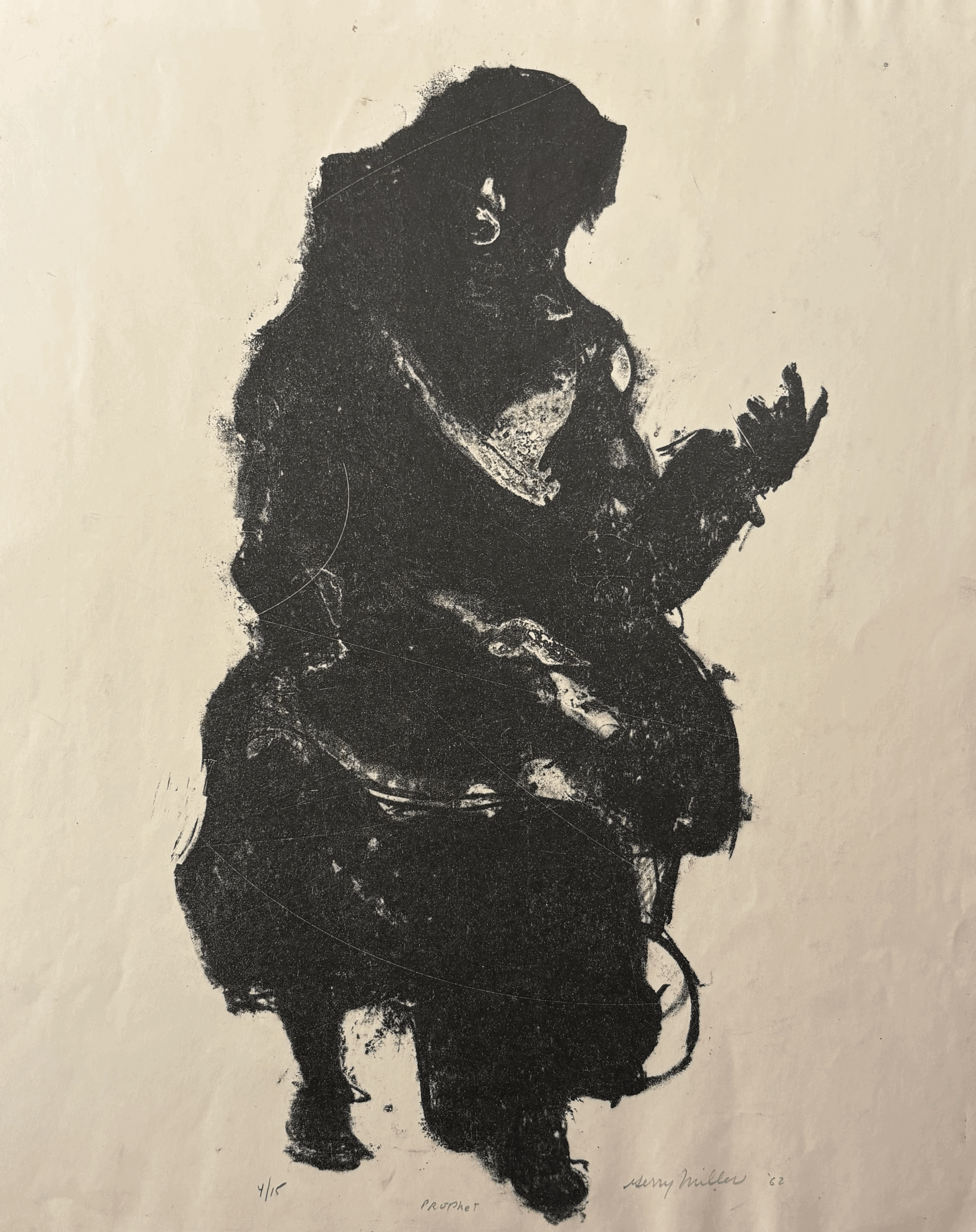
Gerry Miller, “The Prophet” lithograph 1962
Other works, including Prophet (1962), approach the human figure with an intensity that invites a different kind of reflection. Rather than offering straightforward narratives, Miller frequently leaves room for ambiguity and interpretation.
Private Experience
Elsewhere, the focus shifts from public conflict to individual experience.
Works such as Dining Alone, A Quiet Moment, and The Weight of Sorrow suggest a more introspective dimension to Miller's art. Their subjects are not necessarily political in any direct sense. Instead, they explore experiences that are both personal and universal: solitude, vulnerability, uncertainty, and the emotional weight of everyday life.
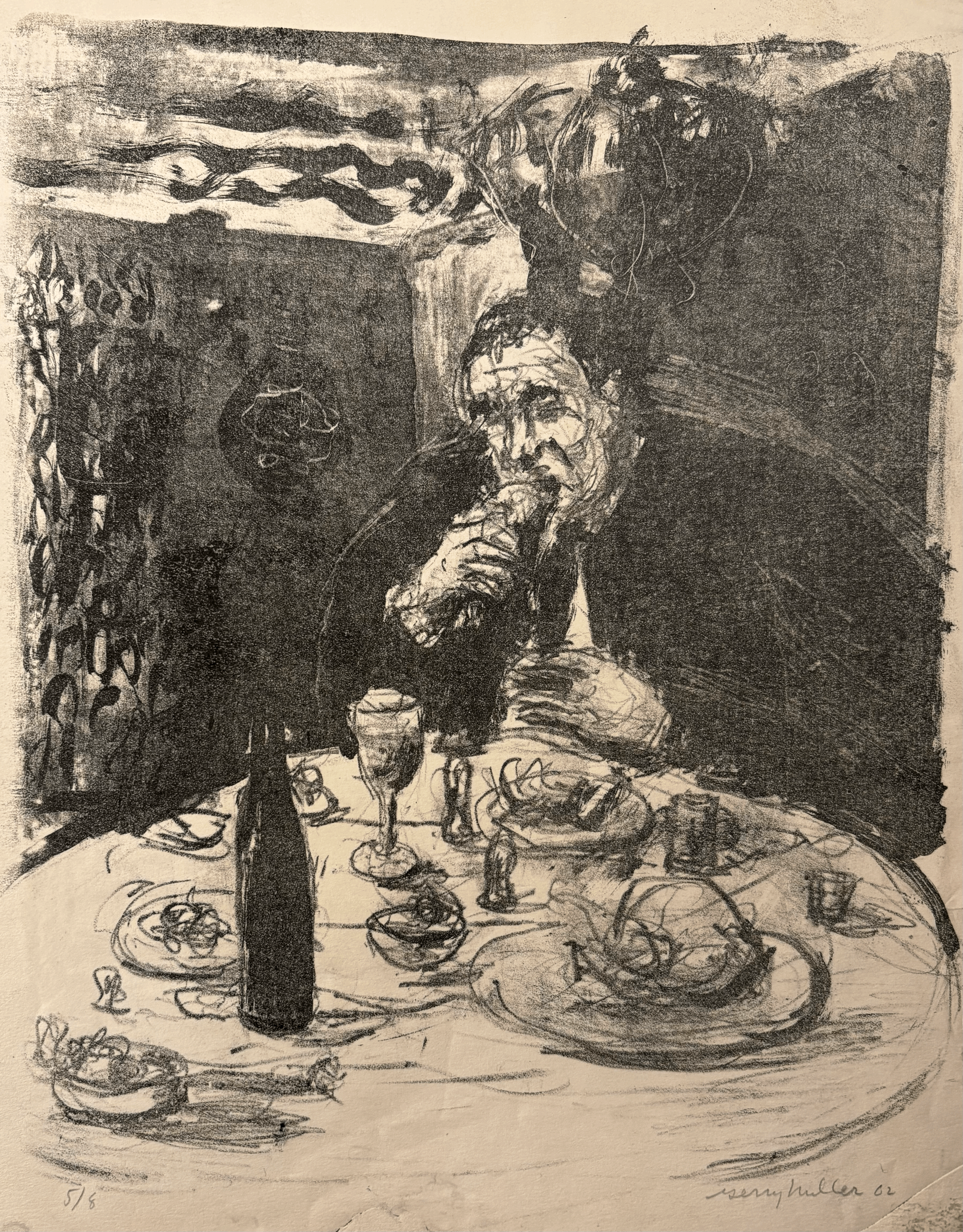
Gerry Miller, “Dining Alone” lithograph 1962
Seen alongside the protest imagery, these quieter works acquire additional resonance.
The distance between public injustice and private experience is not always as great as it first appears. Both concern the individual's relationship to the world around them — the desire to belong, the experience of isolation, and the search for meaning amid circumstances beyond one's control.
Miller's movement between these subjects suggests an artist interested not simply in depicting people, but in exploring what it means to be human.
A Common Visual Language
Across the collection, Miller experiments with different approaches to representation.
Some compositions rely on recognizable figures and emotionally expressive faces. Others move toward abstraction, using bold shapes, contrasting tones, and compressed arrangements to create visual tension.
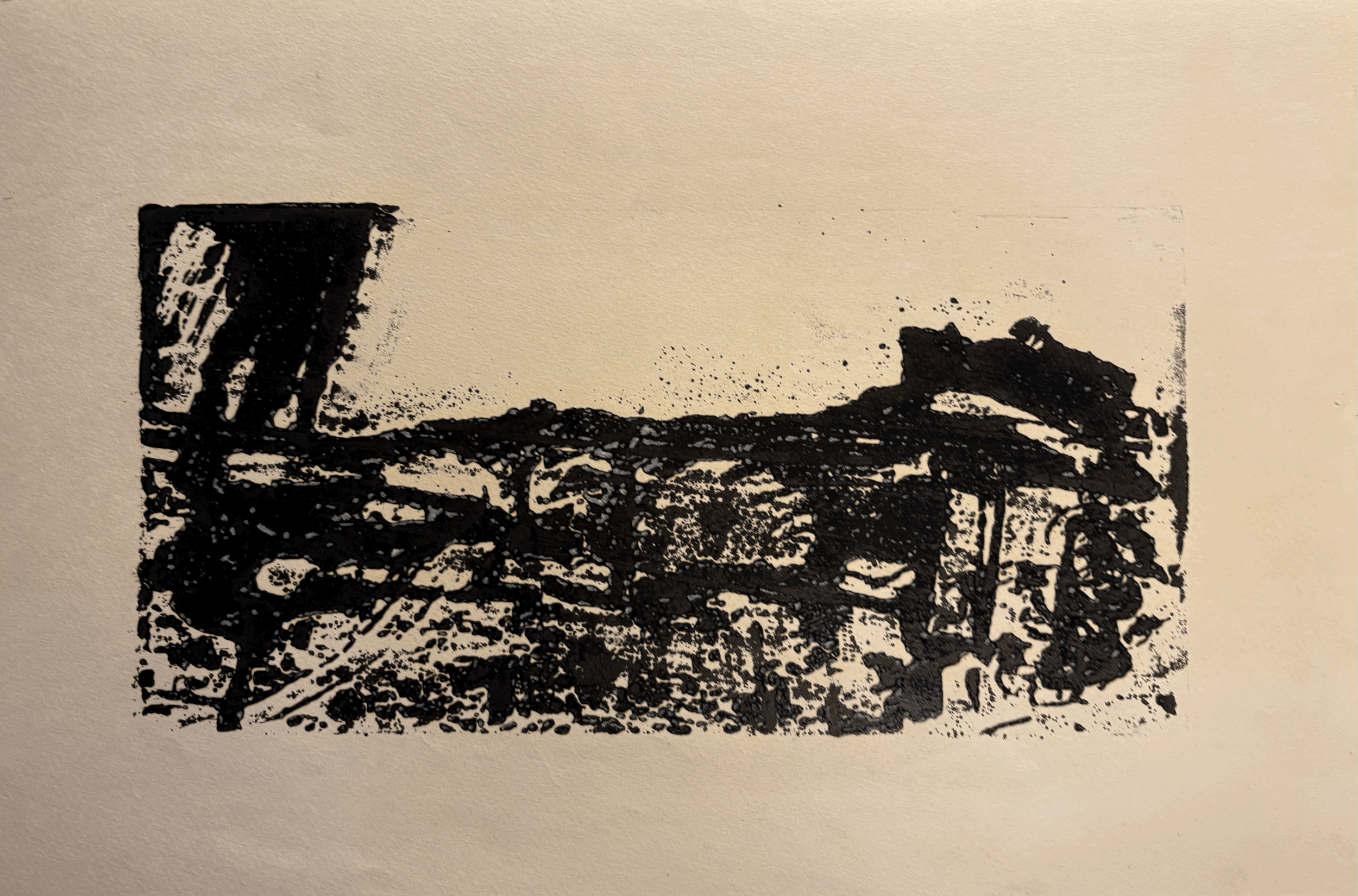
Gerry Miller, “Abstraction (Black Structures)” collograph
These shifts in style do not necessarily indicate shifts in underlying concerns. Instead, they reveal different ways of approaching subjects that resist easy explanation.
Viewed individually, the prints can seem remarkably varied. Seen together, recurring interests become apparent: the expressive possibilities of the human figure, the relationship between individuals and their surroundings, and the tension between order and disruption.
The Art of Looking Again
Art history tends to remember certain names while allowing countless others to recede from view. Recognition is shaped by many factors beyond the quality or originality of an artist's work.
Gerry Miller's prints offer a reminder of what can be found beyond the familiar names.
Encountered together, these works reveal more than a series of individual artistic experiments. They offer a perspective on a turbulent period in American life, filtered through an artist's interest in both society and the individual.
At Printed & Painted, we believe that discovering such work is one of the great pleasures of collecting art.
Sometimes the most rewarding discoveries begin simply by looking again.