
Bernard Brussel-Smith (1914–1989)
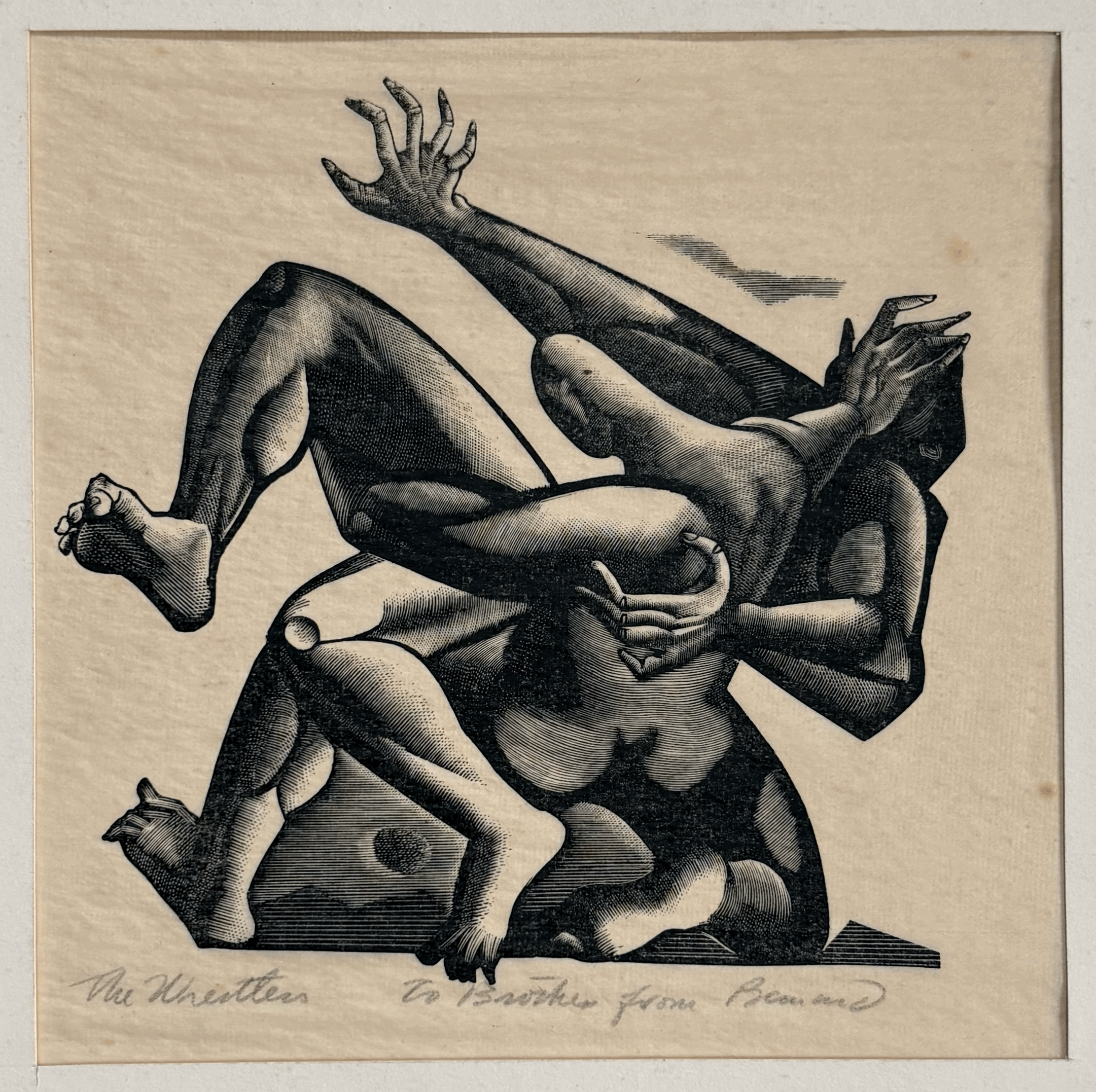
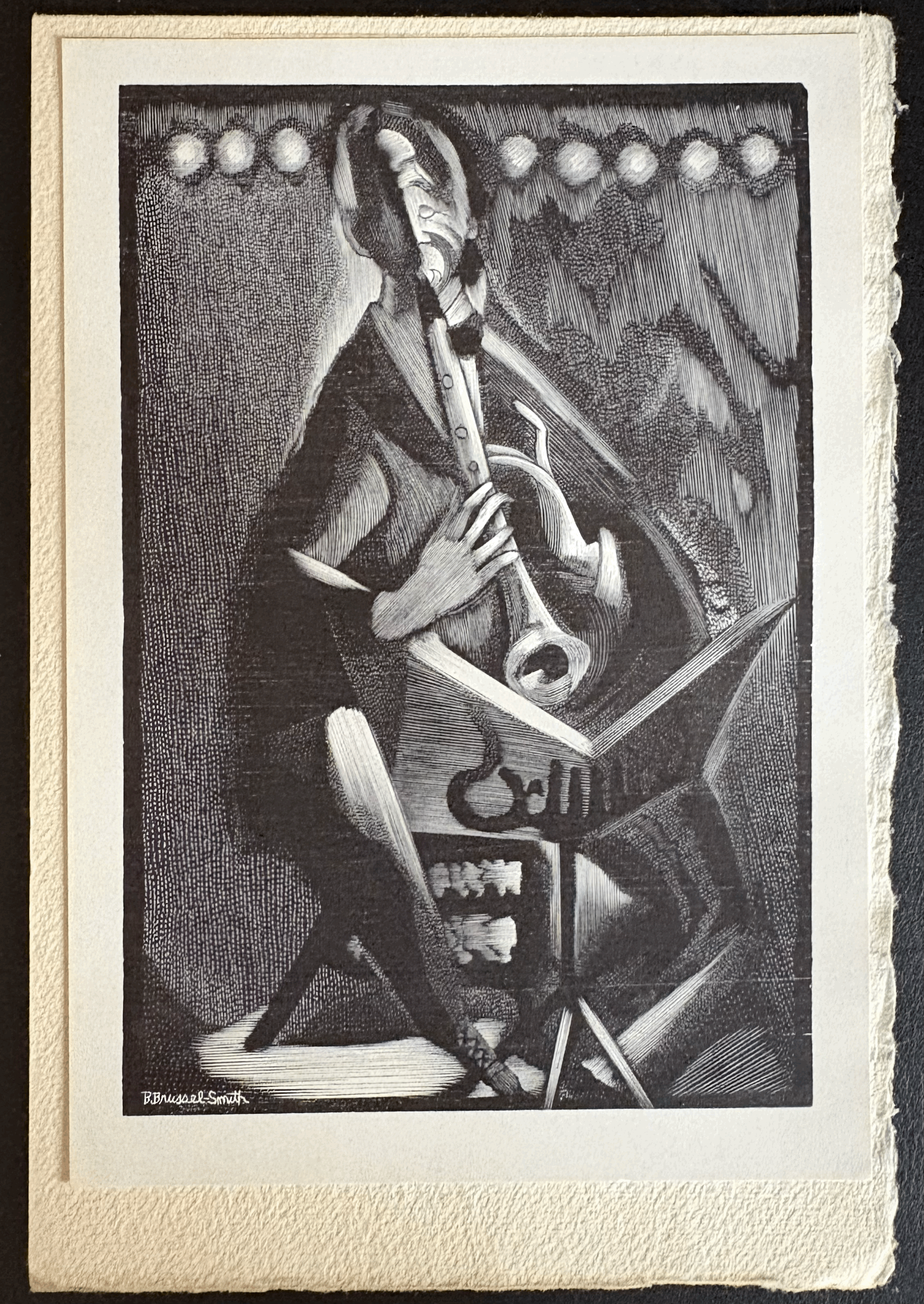
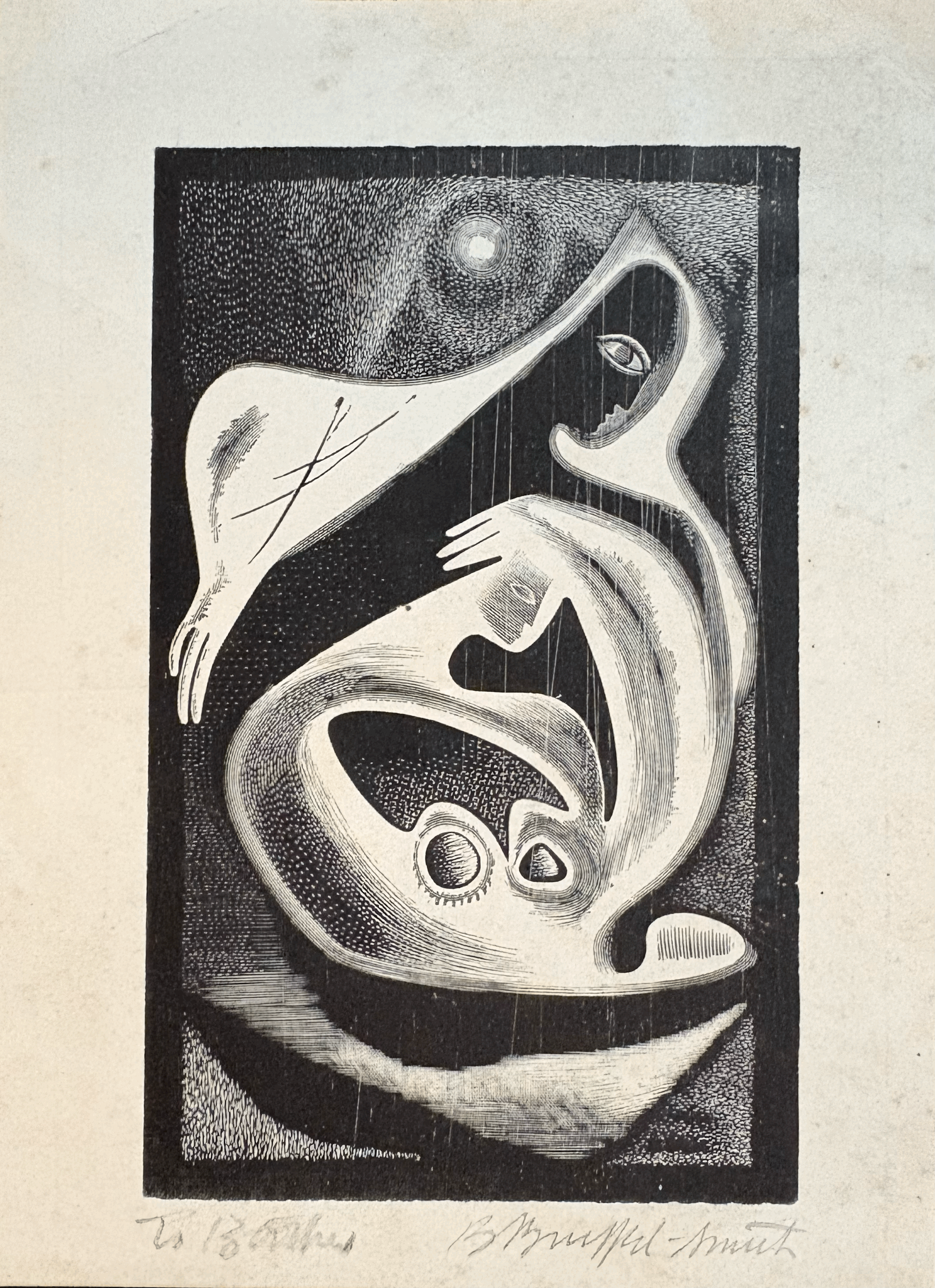
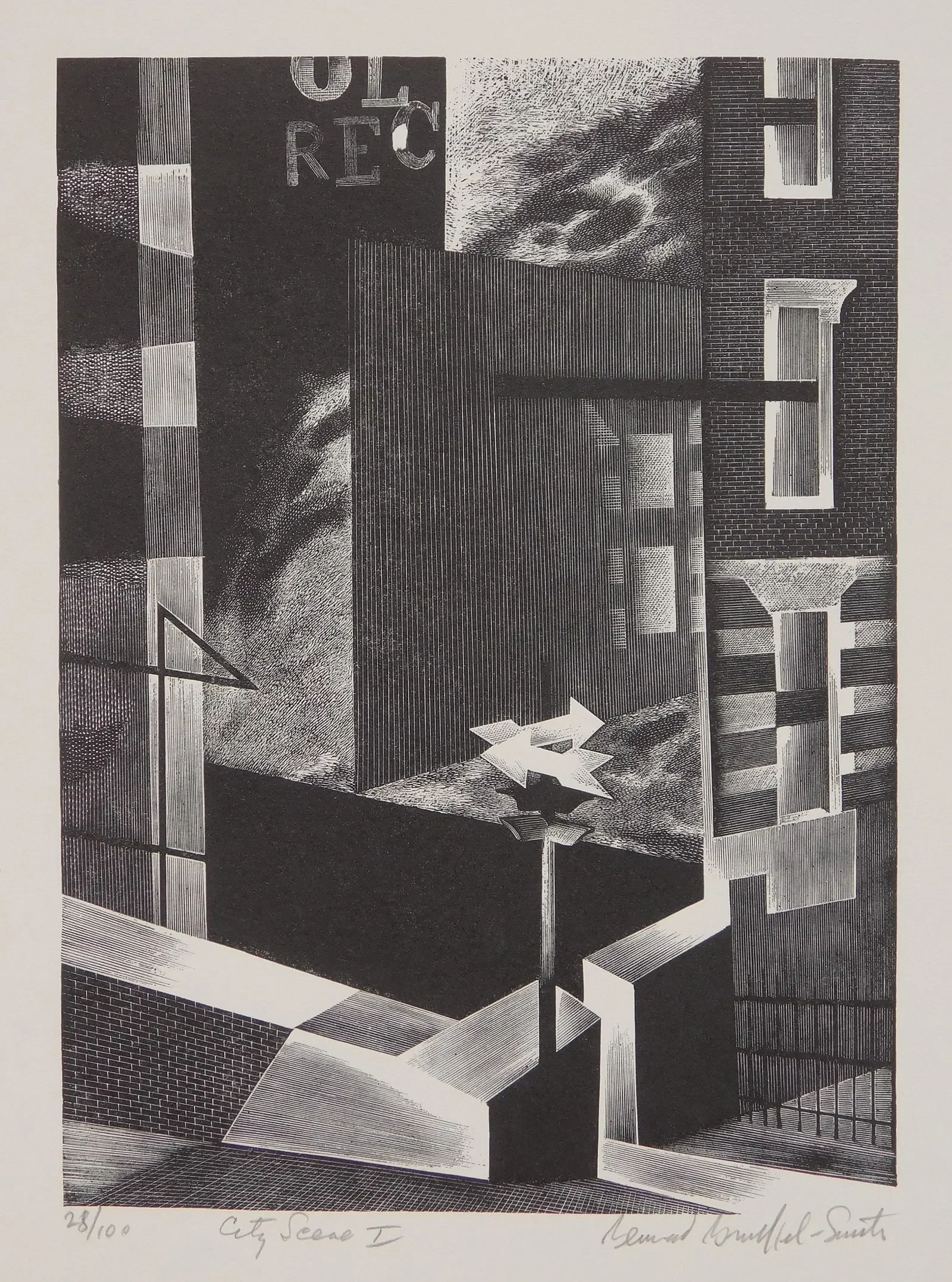
Bernard Brussel-Smith was an accomplished American printmaker whose remarkable mastery of wood engraving brought extraordinary detail, texture, and emotional depth to scenes of everyday life. Working primarily in black and white, he captured the energy of city streets, the dignity of working people, and the quiet beauty of ordinary moments with a distinctive combination of technical precision and artistic sensitivity.
Born in New York City's Greenwich Village, Brussel-Smith studied at the Pennsylvania Academy of the Fine Arts before discovering wood engraving under Fritz Eichenberg at the New School for Social Research. The medium would become his artistic signature, allowing him to transform intricate networks of carved lines into richly expressive images. His work reflects both the social consciousness of mid-century American printmaking and a deeply personal appreciation for the people and places around him.
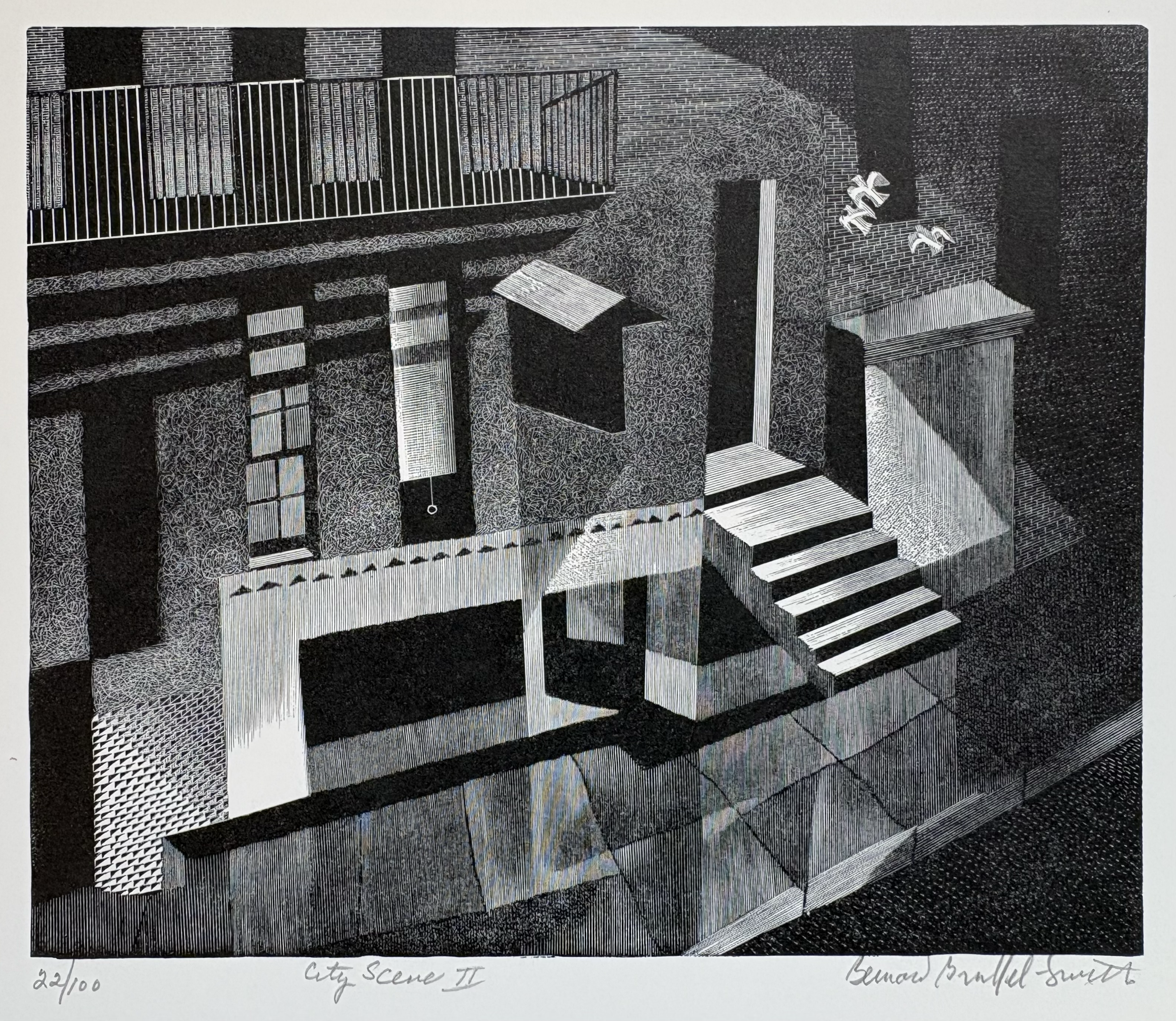
The Artist and His Work
Brussel-Smith began his artistic training at the Pennsylvania Academy of the Fine Arts in 1931, studying painting and lithography before turning to wood engraving in 1941. Under the guidance of Fritz Eichenberg, he quickly demonstrated an exceptional aptitude for the demanding technique, eventually becoming Eichenberg's teaching assistant.
His subjects were frequently drawn from the world around him: sailors, laborers, street musicians, crowded city streets, and the rhythms of everyday American life. These images combine a keen observational eye with a genuine sympathy for ordinary people, placing his work within the broader tradition of American social realism.
Alongside his fine art practice, Brussel-Smith enjoyed a successful career as a commercial illustrator, producing work for publications including Life, The Saturday Evening Post, and Reader's Digest. His distinctive engravings also appeared in advertising campaigns, most notably his celebrated posters for the New York Auto Show during the 1950s and 1960s.
In 1957 and 1958, Brussel-Smith studied with the influential printmaker Stanley William Hayter in Paris, exploring experimental printmaking techniques. His subsequent summers in the French village of Collonges-la-Rouge inspired a body of landscape and architectural engravings that expanded his subject matter beyond the American urban experience.
Brussel-Smith also taught at Cooper Union, the Brooklyn Museum, City College of New York, and the National Academy of Design, where he was elected an Associate Member in 1952 and a full Academician in 1973.
His work has been exhibited widely, including at Associated American Artists and in retrospectives at Fairleigh Dickinson University and Yale University's Sterling Memorial Library. His engravings are represented in major institutional collections, including the Library of Congress, the Philadelphia Museum of Art, the New York Public Library, and the National Gallery of Art.
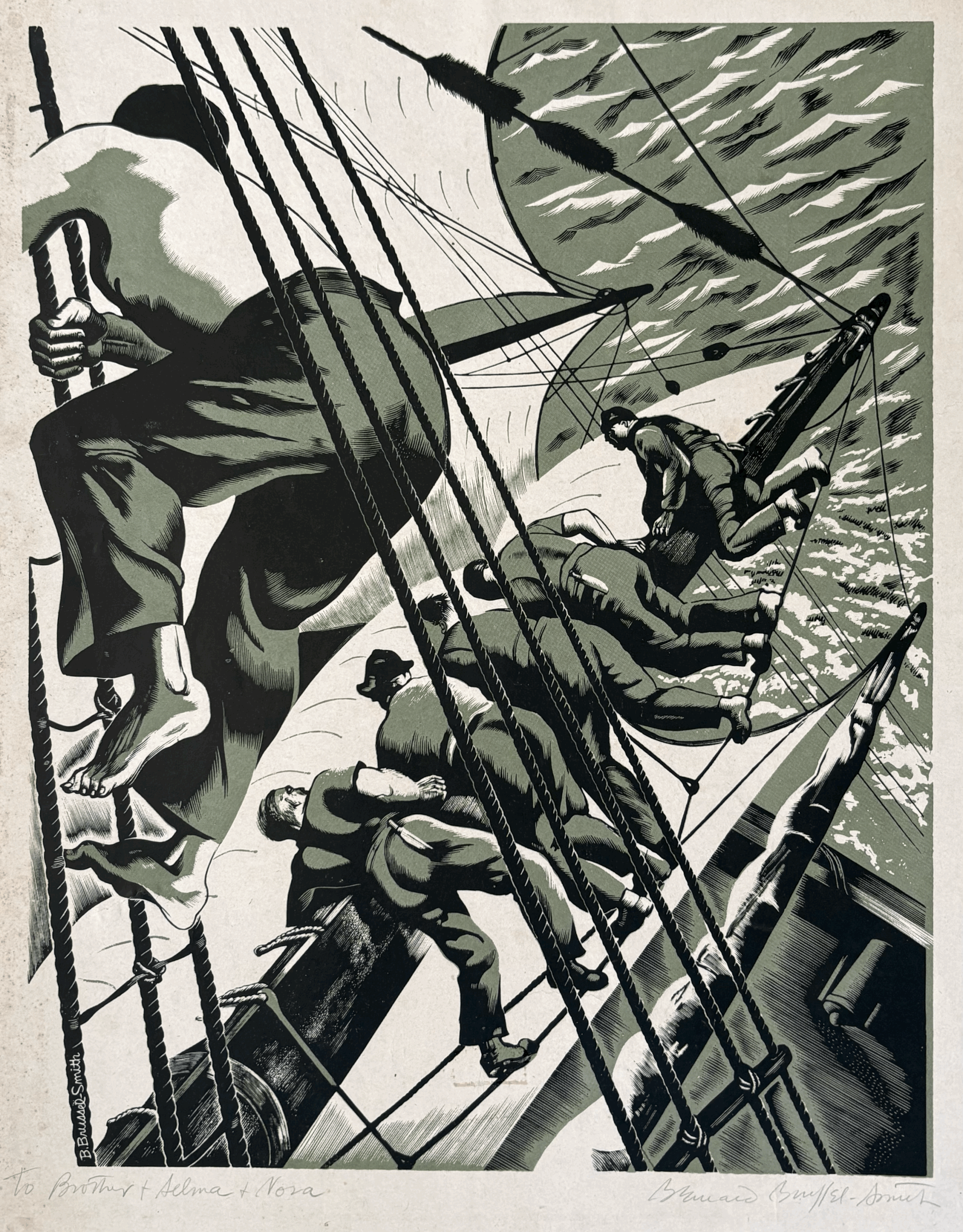
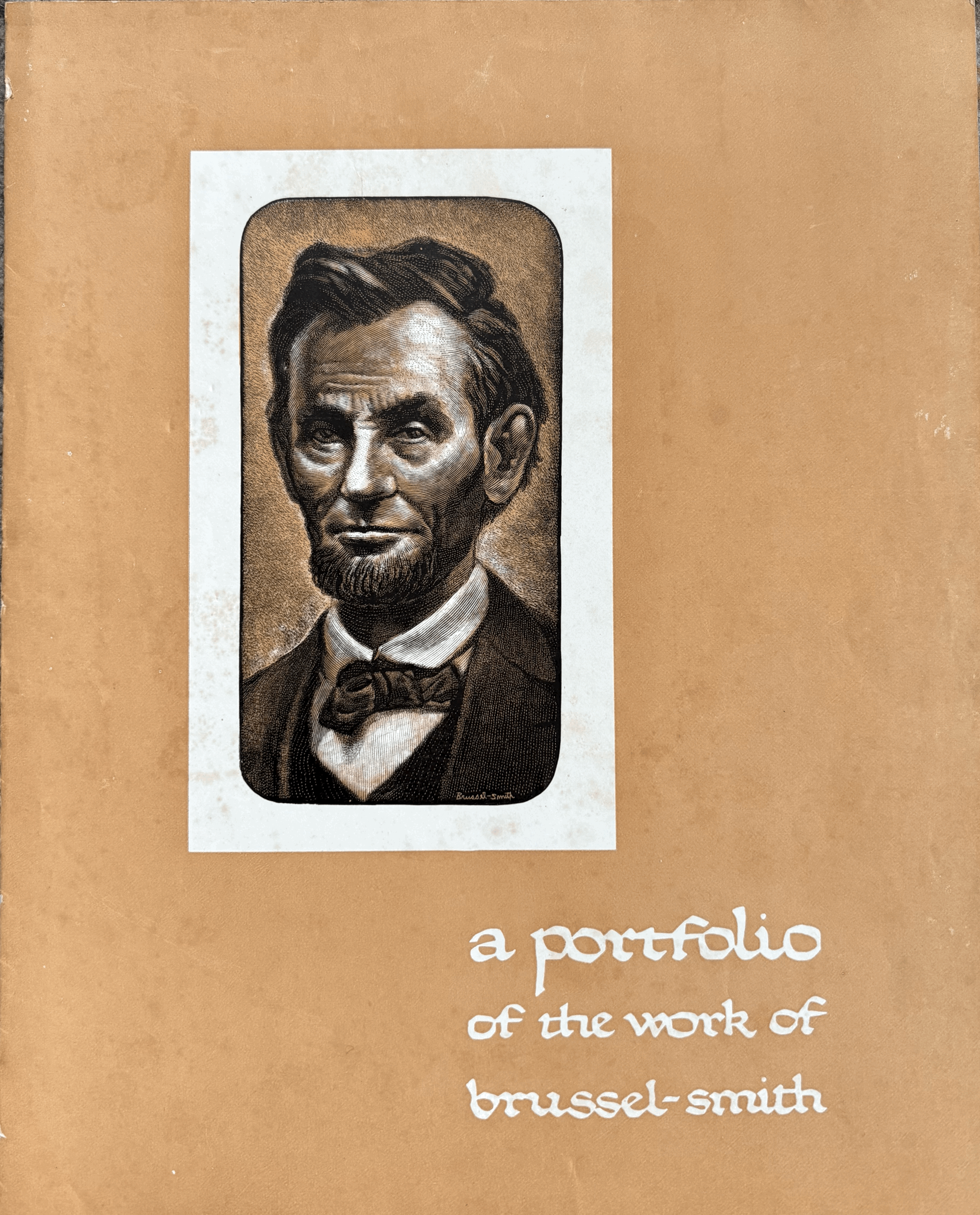
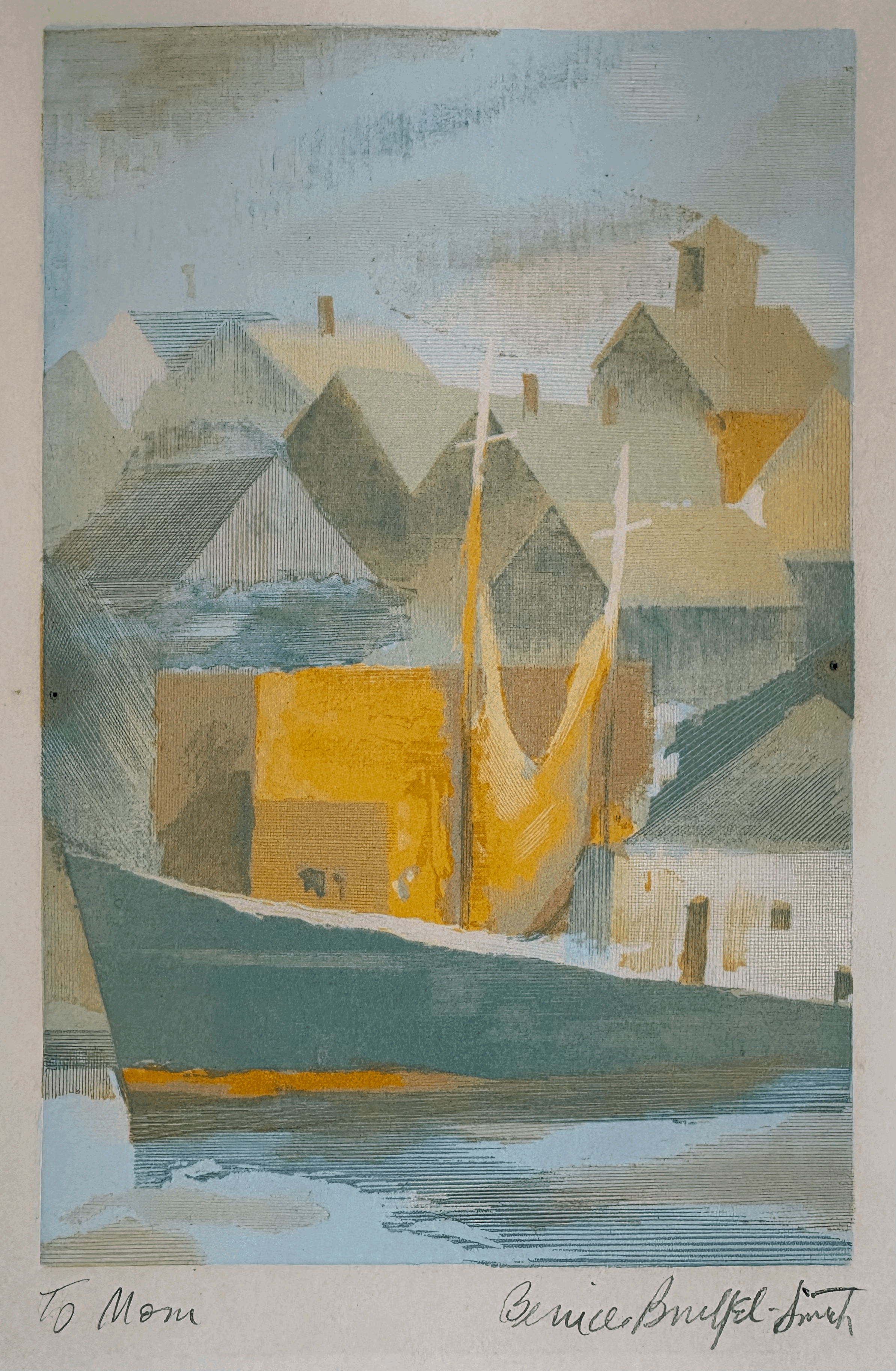
Bernard Brussel-Smith (1914–1989)
Polonius's Charge to Laertes
1957
Original five-color wood engraving
Print: 10 × 12.5 inches
Original presentation folder: 13 × 19.75 inches
Signed in pencil lower right; signed in the block
Personally inscribed to the artist's brother and family
Published by the William Feather Company, Cleveland, Ohio
Limited edition, edition size unspecified
An exceptional five-color wood engraving by American printmaker Bernard Brussel-Smith, illustrating the farewell between Polonius and his son Laertes from William Shakespeare's Hamlet, Act I, Scene 3. Created in 1957, the composition depicts the two figures embracing beneath a monumental architectural archway, rendered in a striking combination of red, yellow, gray, black, and muted earth tones.
The work carries particular personal significance. Brussel-Smith used himself and his son Peter as models for the figures, transforming Shakespeare's familiar scene into a deeply personal meditation on fatherhood, love, and the passage from one generation to the next. The expanding circles surrounding the figures symbolize the enduring bond between father and son, while the architectural passageway represents accumulated wisdom and the illuminated doorway suggests the uncertain future awaiting the younger man.
Commissioned by the William Feather Company of Cleveland, Ohio, under the direction of designer Ray G. Egert, the engraving was produced as a limited-edition example of fine printing. This impression retains its original publisher's presentation folder, which includes Shakespeare's text, an explanation of the composition's symbolism, and documentation of the commission and printing process.
The engraving is signed in pencil by Brussel-Smith and bears a personal inscription to his brother and family. It comes from a small group of the artist's works bearing related family dedications, providing an especially meaningful connection to the artist's personal life.
Another impression of Polonius's Charge to Laertes is held in the collection of the Library of Congress, which featured the work in its American Treasures exhibition.
Condition: The engraving appears to be in very good condition, retaining strong, vibrant colors with minor age-related toning and scattered spotting. The original presentation folder exhibits more noticeable toning, foxing, and handling wear, particularly on the exterior. The engraving remains loose and unmounted within the folder, allowing for independent framing while preserving the original presentation materials.