Bernard Brussel-Smith (1914–1989)
Polonius's Charge to Laertes
1957
Original five-color wood engraving
Print: 10 × 12.5 inches
Original presentation folder: 13 × 19.75 inches
Signed in pencil lower right; signed in the block
Personally inscribed to the artist's brother and family
Published by the William Feather Company, Cleveland, Ohio
Limited edition, edition size unspecified
An exceptional five-color wood engraving by American printmaker Bernard Brussel-Smith, illustrating the farewell between Polonius and his son Laertes from William Shakespeare's Hamlet, Act I, Scene 3. Created in 1957, the composition depicts the two figures embracing beneath a monumental architectural archway, rendered in a striking combination of red, yellow, gray, black, and muted earth tones.
The work carries particular personal significance. Brussel-Smith used himself and his son Peter as models for the figures, transforming Shakespeare's familiar scene into a deeply personal meditation on fatherhood, love, and the passage from one generation to the next. The expanding circles surrounding the figures symbolize the enduring bond between father and son, while the architectural passageway represents accumulated wisdom and the illuminated doorway suggests the uncertain future awaiting the younger man.
Commissioned by the William Feather Company of Cleveland, Ohio, under the direction of designer Ray G. Egert, the engraving was produced as a limited-edition example of fine printing. This impression retains its original publisher's presentation folder, which includes Shakespeare's text, an explanation of the composition's symbolism, and documentation of the commission and printing process.
The engraving is signed in pencil by Brussel-Smith and bears a personal inscription to his brother and family. It comes from a small group of the artist's works bearing related family dedications, providing an especially meaningful connection to the artist's personal life.
Another impression of Polonius's Charge to Laertes is held in the collection of the Library of Congress, which featured the work in its American Treasures exhibition.
Condition: The engraving appears to be in very good condition, retaining strong, vibrant colors with minor age-related toning and scattered spotting. The original presentation folder exhibits more noticeable toning, foxing, and handling wear, particularly on the exterior. The engraving remains loose and unmounted within the folder, allowing for independent framing while preserving the original presentation materials.

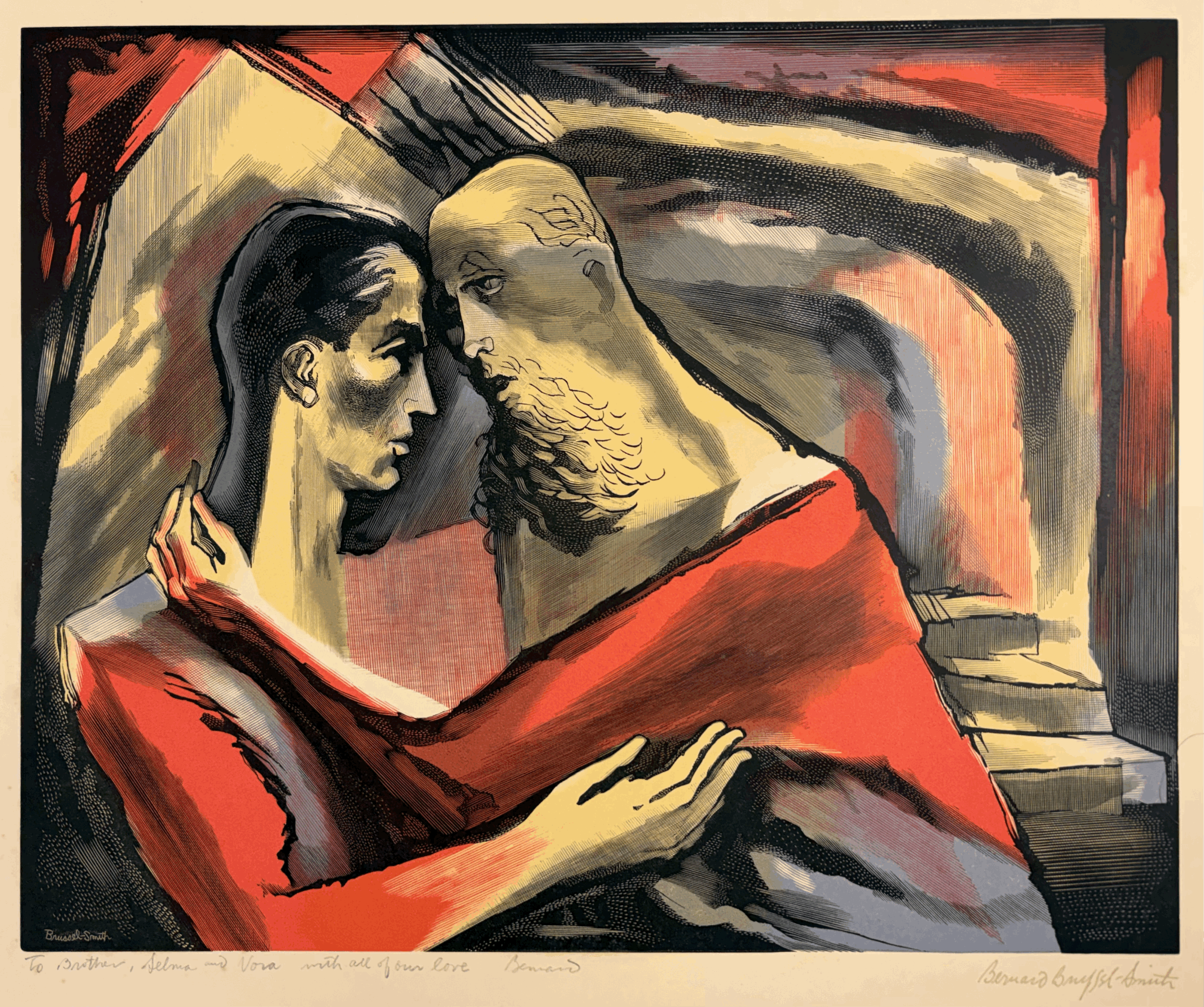 Image 1 of 6
 Image 2 of 6
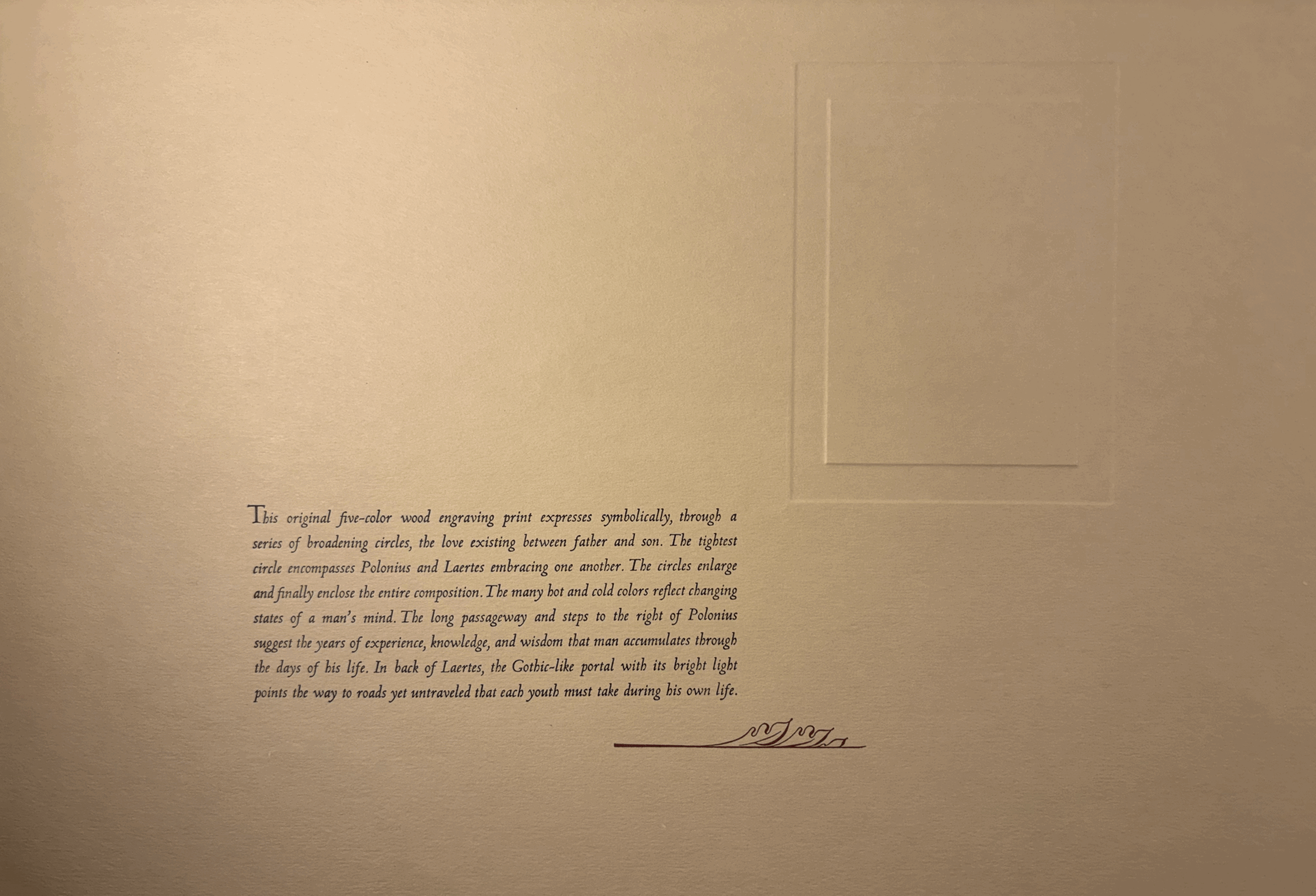 Image 3 of 6
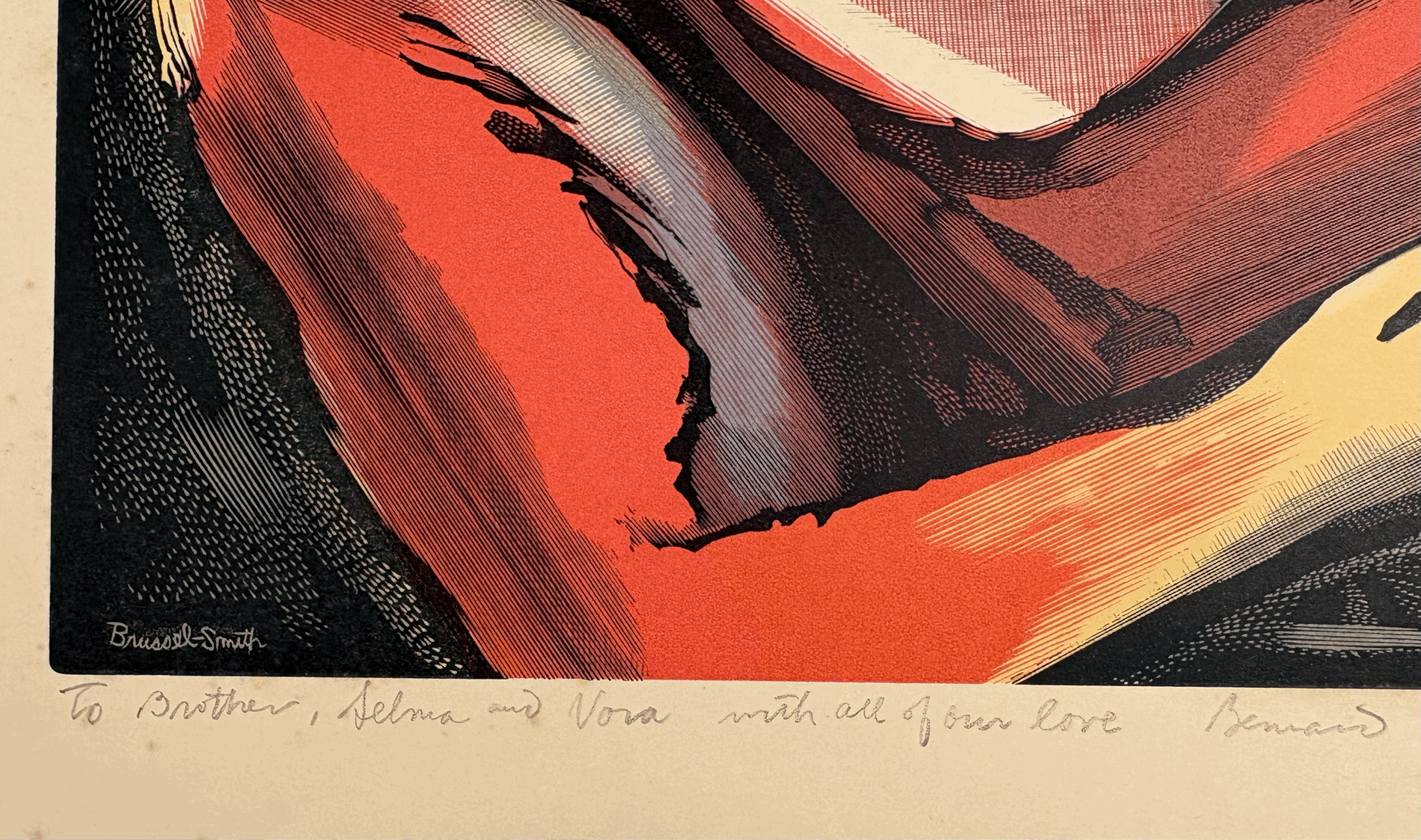 Image 4 of 6
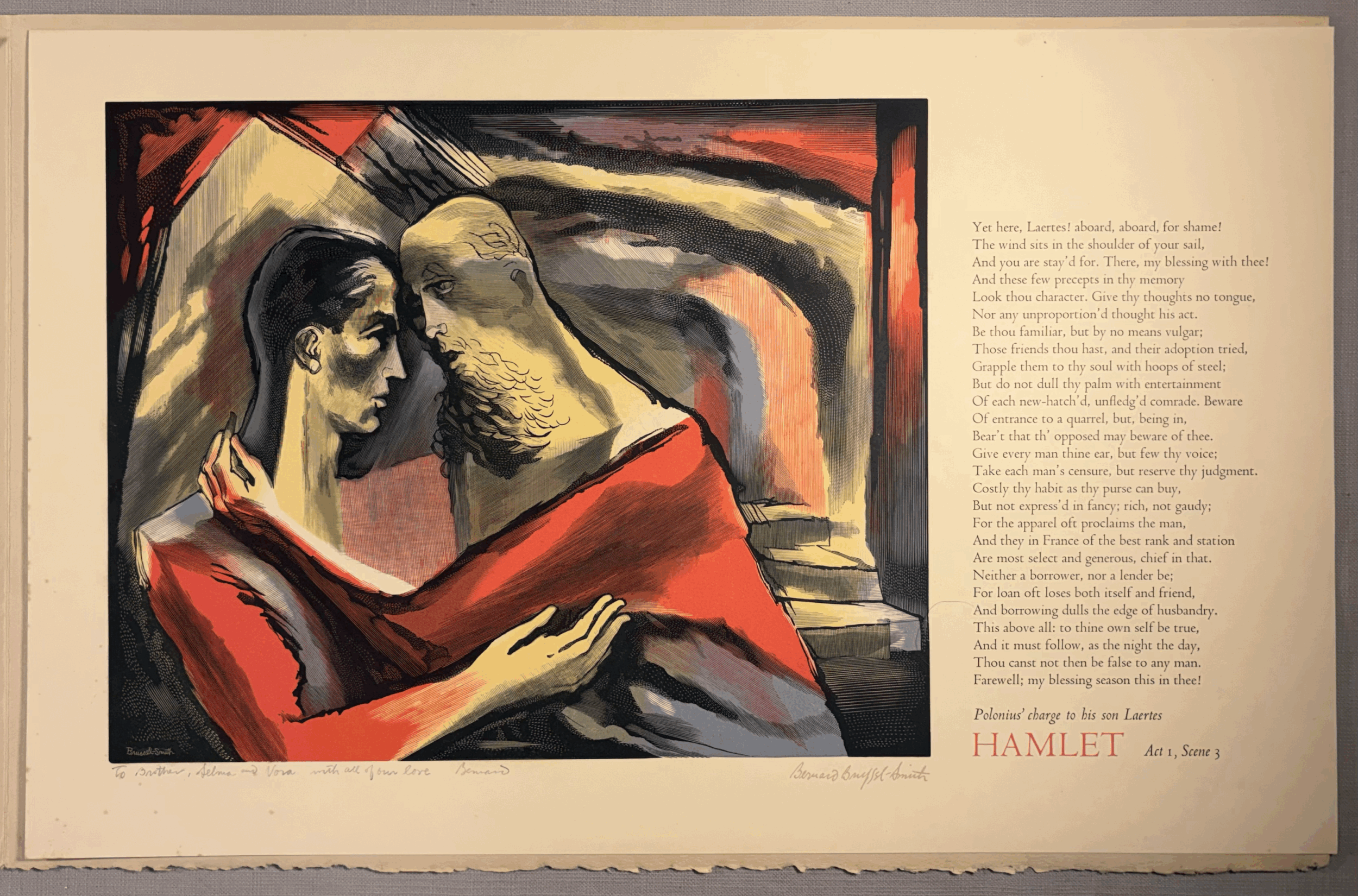 Image 5 of 6
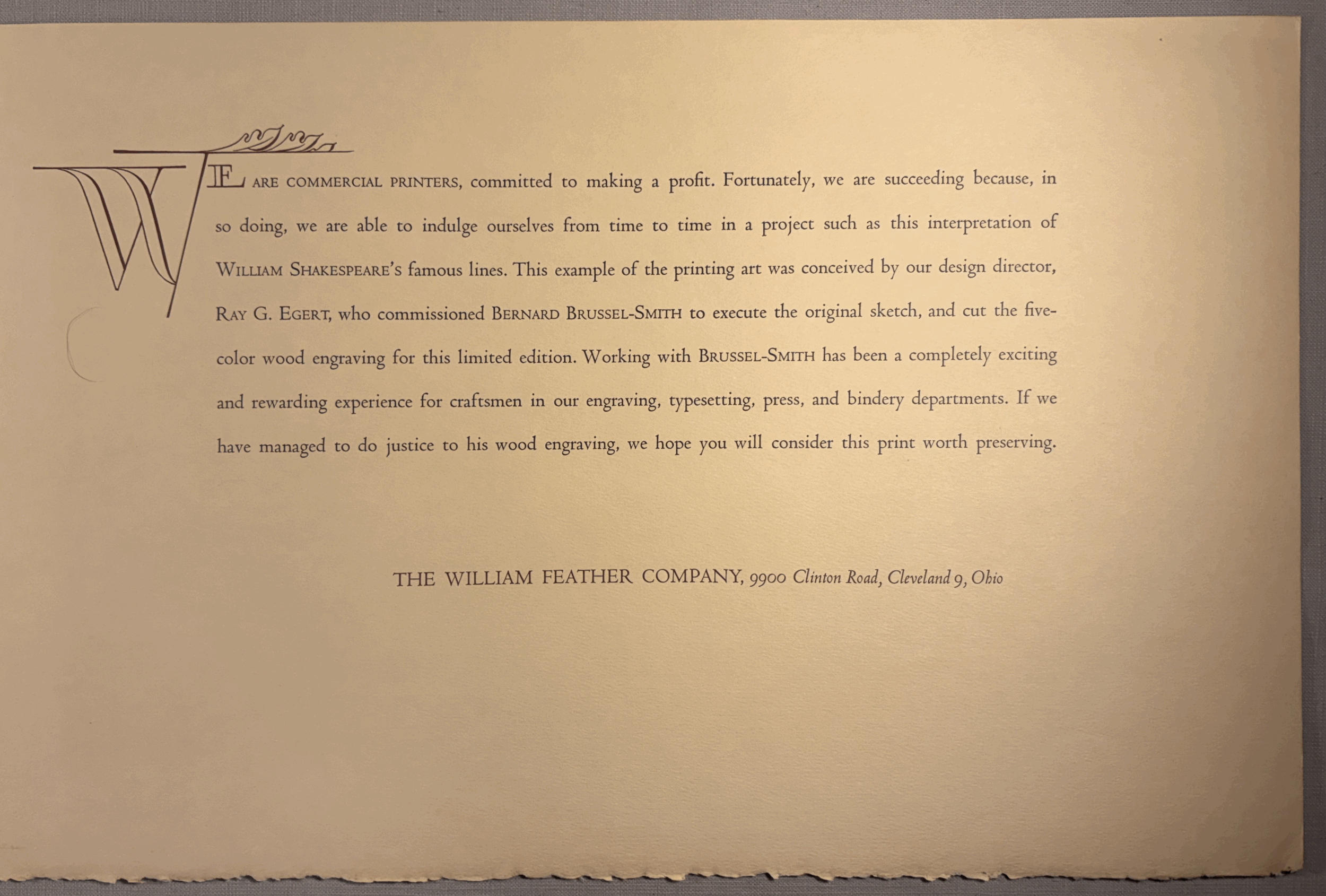 Image 6 of 6